

Pack meeting
Updates need one trusted home.
If the room, time, or gear list changes, leaders should not have to resend the same answer across every channel they use.
Built by a Scouter. Shaped by real unit life.
Woggle started with a simple frustration: too much of Scouting coordination happens in the cracks between tools. Text threads, email chains, spreadsheets, signups, and last-minute reminders were creating more work for the people already doing the most. We built Woggle to make that part of Scouting calmer, clearer, and easier on families and volunteers.
From the field
Built by Scouters, around the real weekly work of meetings, campouts, RSVPs, and volunteer asks.
The problem we kept living
If you have ever tried to run a pack meeting, campout, fundraiser, or leader event, you know the pattern. One update goes out in email. A follow-up happens in text. RSVPs show up in three different places. Someone asks who is bringing gear. Someone else misses the change in plans. A leader ends up stitching it all together by hand.
That patchwork works just well enough to survive. But it creates noise, repeated questions, missed details, and too much volunteer effort spent managing logistics instead of delivering a great program.
The problem was never that leaders were disorganized. The problem was that the tools were.
Why we built Woggle
Woggle did not start as a generic community platform. It started from firsthand experience inside Scouting, where family logistics, volunteer coordination, youth-safety expectations, and program delivery all intersect.
The need was clear: units needed something better than scattered tools, but more practical than a heavyweight system trying to do everything. The answer was a coordination layer designed around the real rhythm of unit life.
What makes Woggle different
The goal was not to create another place for chatter. It was to make the coordination load lighter for the volunteers and families carrying it.
Built for Scouting
Woggle is designed for the way Scout units actually operate, not adapted from workplace software or generic social tools.
Household-aware by design
Scouting is family logistics. Woggle treats that reality as a first-class part of the experience so leaders are not piecing attendance together from scattered replies.
Less noise, more clarity
The point is not to add another stream of chatter. It is to give units a calmer, clearer way to coordinate what matters.
Trust matters
Youth-serving organizations need better defaults than generic chat apps. Woggle is shaped by that responsibility from the start.
Built in the real world
Woggle has been shaped by the real work of Scouting: planning meetings, coordinating campouts, chasing RSVPs, answering parent questions, organizing volunteers, and trying to keep everyone aligned without drowning in admin.
That real-world origin matters. It keeps the product grounded in practical needs instead of theoretical workflows, and it keeps the details tied to what actually breaks in everyday unit coordination.

The question behind Woggle
Why is this harder than it should be?
The easier way
Pack meeting
Updates need one trusted home.
If the room, time, or gear list changes, leaders should not have to resend the same answer across every channel they use.
Campout
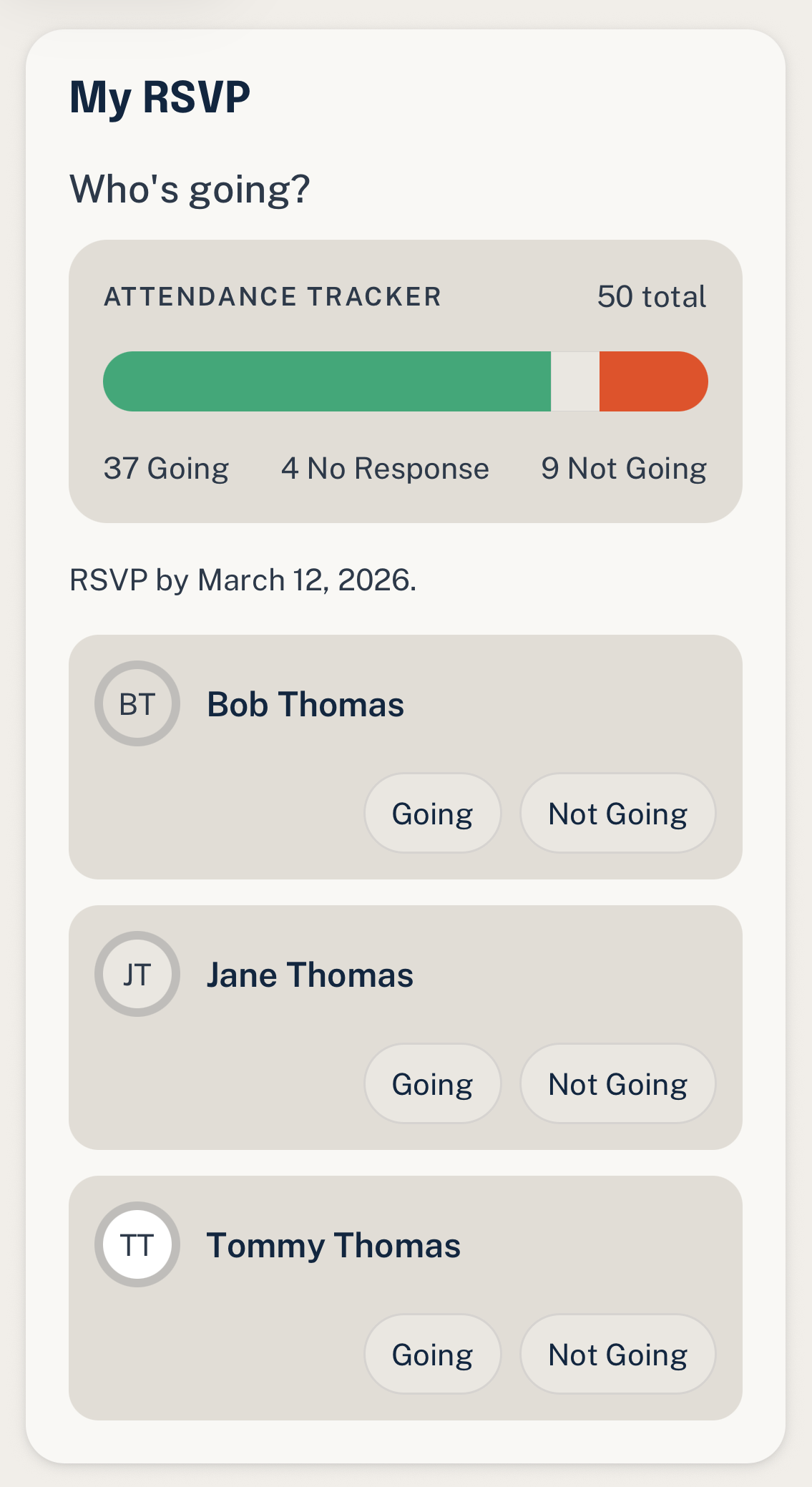
Attendance has to resolve by household.
One parent reply should make the whole family picture clearer instead of creating another thread to reconcile.
RSVP chaos
The plan should stay attached to the event.
When critical details drift into text threads, the event stops feeling managed and starts feeling fragile.
Volunteer asks
Ownership should stay visible.
Drivers, gear, snacks, and last-mile help should feel assigned, not implied and easy to forget.
Our philosophy
Software should not become another thing leaders have to manage. It should quietly make the job easier, help families stay informed, and create more room for the parts of Scouting that actually matter.
01
Respect volunteer time
Every screen should help leaders spend less energy chasing details and more energy running the program.
02
Make family coordination easier
The real unit is the household. Good software should honor that instead of pretending every reply starts from scratch.
03
Keep communication high-signal
Important updates should stay readable, findable, and anchored to the event they affect.
04
Support healthy youth-serving communities
Woggle is built with guardian-mediated participation and leader visibility in mind because trust is part of the product job.
05
Stay practical and useful
The goal is not to be clever or all-encompassing. The goal is to solve the coordination problem well.
Scoutbook is for records. Woggle is for coordination. Those jobs are different, and the product is better when it respects that boundary.
What Woggle is and isn't
Woggle is not trying to replace every system a unit uses. Records systems, registration systems, and advancement tools all serve their own purpose.
Woggle’s job is narrower and more practical: help units coordinate the moving parts of real program life. That focus stays aligned with youth-safety expectations and the day-to-day lessons we keep collecting from leaders in the field. If you want the broader context, the resource library goes deeper.
A calmer home for events, attendance, volunteer asks, and the updates attached to them.
A household-aware system that reflects how Scout families actually coordinate.
A practical coordination tool built so leaders spend less time routing logistics by hand.
A replacement for every records, registration, or advancement system a unit already depends on.
Another open-ended chat feed that creates more noise than clarity.
A generic community app that happens to mention Scouting in the copy.
If your unit is tired of scattered messages, missed updates, and volunteer coordination by patchwork, Woggle was built for you.